
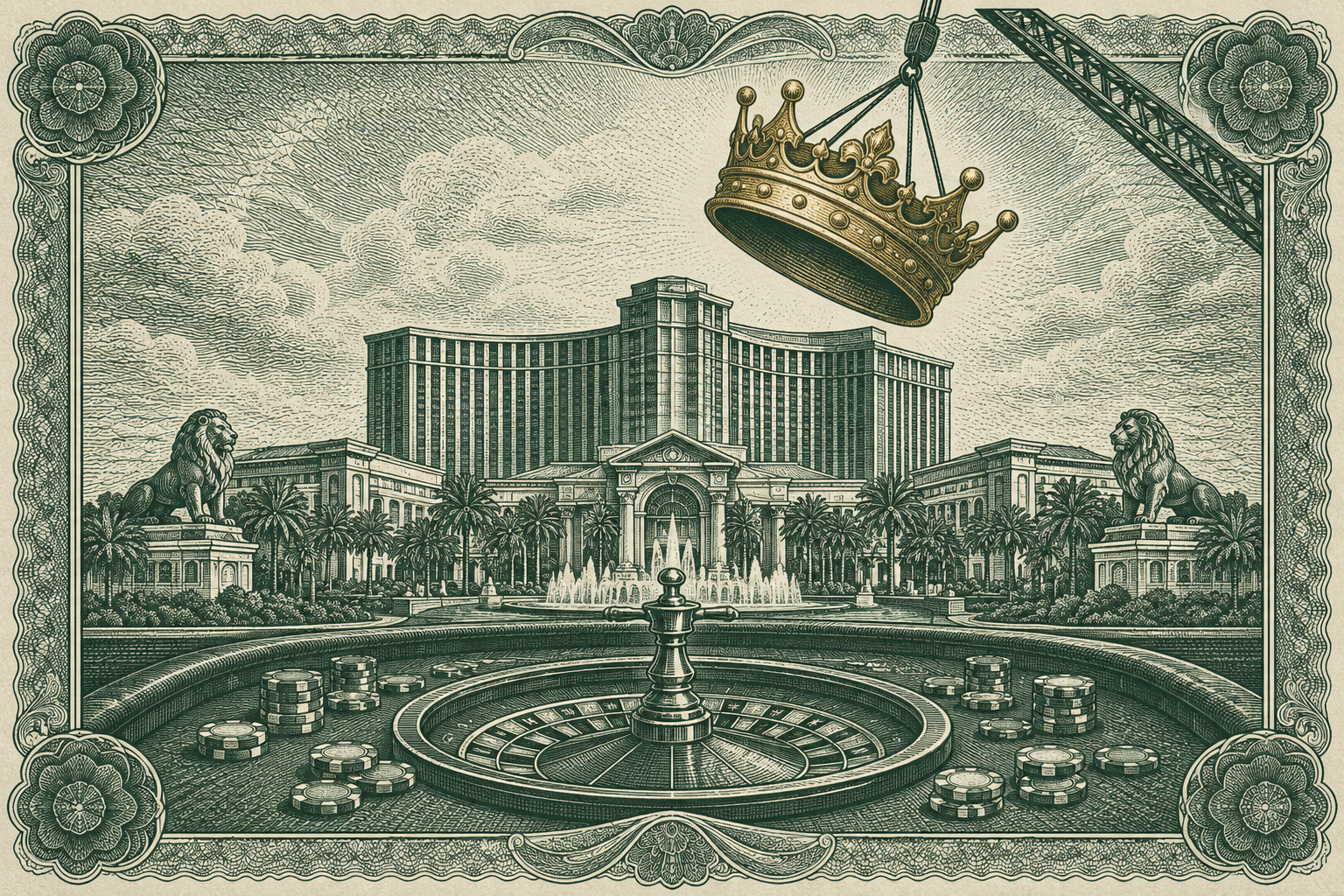
MGM Resorts International was a market story built partly on a promise that never became a transaction. When Barry Diller’s People Inc. withdrew its takeover bid, that promise vanished—and so did a key pillar supporting MGM’s stock premium.
The sharp reversal is a reminder that takeover speculation can make a share price look sturdier than the underlying investment case. Once the bidder walks away, traders are left asking a less glamorous question: what is the business worth without the deal?
According to Seeking Alpha’s report, MGM shares plunged after People Inc. abandoned its bid. The withdrawal removed a catalyst that had been supporting the stock’s premium, turning an event-driven trade into a sudden reassessment of fundamentals.
When the deal becomes the story
M&A speculation can act like a spotlight. It draws attention to a company, encourages traders to price in a possible offer, and can support a valuation above what earnings and cash flow alone might justify. That does not necessarily mean the company’s operating outlook has changed. It means the market has added another possible source of value.
But that extra value is conditional. If the bid disappears, the premium may disappear with it. The resulting move can be especially abrupt when investors were positioned for a transaction rather than for the ordinary rhythm of casino and leisure operations.
A familiar hazard for leveraged leisure names
MGM’s episode also underscores the sensitivity of gaming and leisure companies with high leverage. Deal news can dominate sentiment in these businesses, sometimes pushing earnings quality and cash-flow durability into the background. A bidder’s interest may make balance-sheet concerns feel temporarily less urgent; a bidder’s withdrawal can put them back in the foreground.
That is the uncomfortable distinction between deal support and business support. A takeover premium is tied to another party’s willingness and ability to pursue a transaction. Earnings and cash flow are tied to the company’s operating performance. They can both matter, but they are not interchangeable.
The lesson for event-driven traders
For traders, the withdrawal is a cautionary example of how quickly momentum can reverse when the central event fails. For more conservative investors, it highlights the appeal of fundamentally durable, cash-flow-backed businesses whose valuation does not depend primarily on a prospective bidder.
MGM’s plunge does not by itself settle the company’s long-term earnings outlook. It does, however, expose the fragility of a valuation supported by M&A expectations. When the deal disappears, the market may demand that the business stand on its own.
Bull/Bear Verdict
Bull Case: MGM’s underlying earnings and cash-flow outlook may remain more durable than the plunge suggests, particularly if the takeover withdrawal changes sentiment more than operating performance.
Bear Case: The withdrawal removed a key catalyst and exposed the risk that MGM’s premium was tied to deal speculation, leaving the high-leverage gaming and leisure company vulnerable to further sentiment swings.