
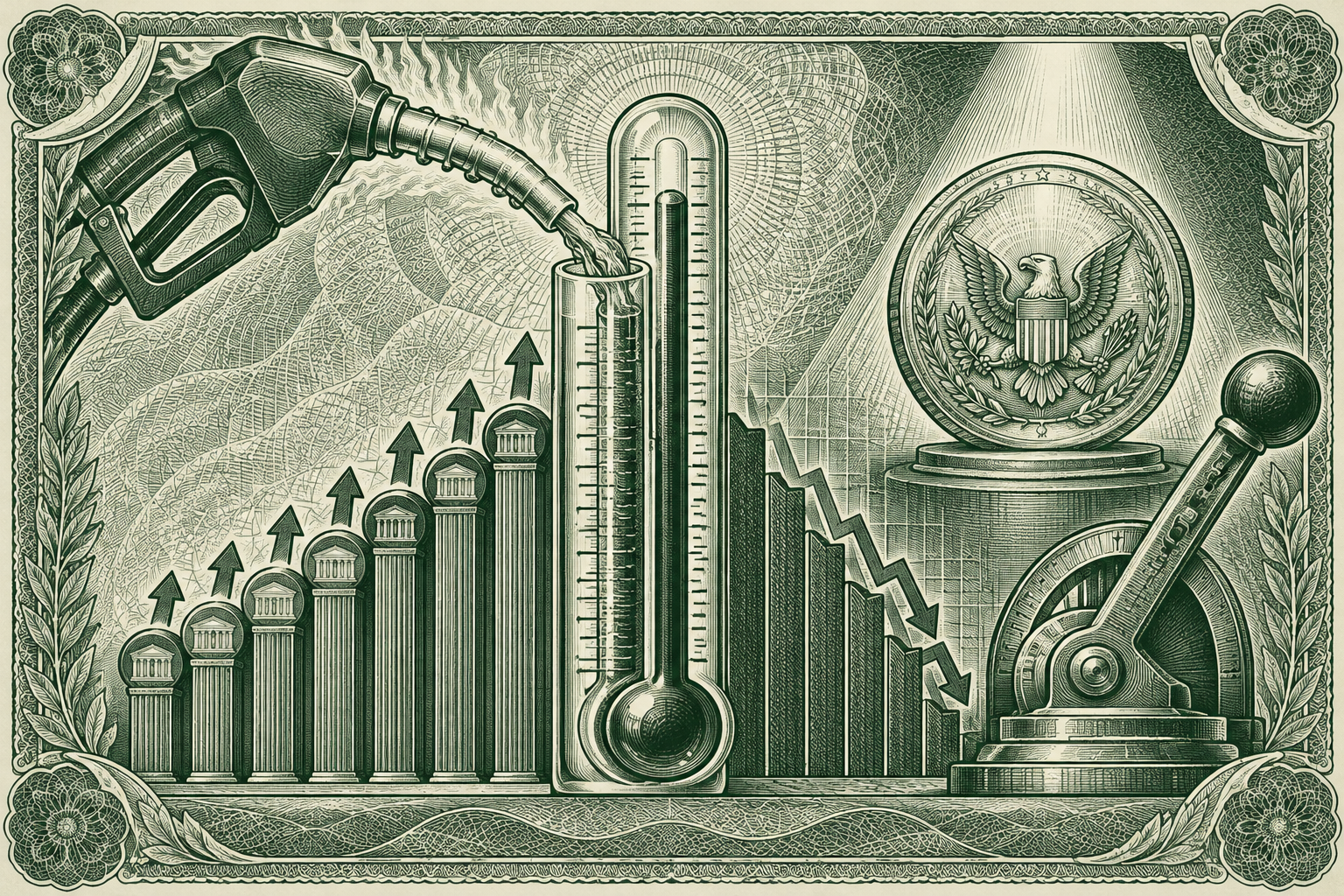
Inflation is proving once again that the last mile is rarely smooth. A hotter-than-expected September consumer-price report pushed stocks lower, Treasury yields higher and the US Dollar Index stronger as traders reassessed how quickly the Federal Reserve can ease policy.
Gasoline was the immediate culprit, but the market’s concern extends beyond the pump. Core CPI was also firmer than expected, raising the possibility that policymakers may delay or pause rate cuts even as the federal funds rate remains below its level a year earlier.
According to the reported September CPI data, gasoline prices rose 9.1% during the month after increasing 3.9% in August. Fuel oil climbed 15.3% over the same period. Those moves supplied a powerful headline boost to inflation and helped explain the immediate repricing across US markets.
The bond market hears a warning
Treasury yields moved higher as traders absorbed the idea that inflation may not be cooling in a straight line. Higher yields matter because they raise borrowing costs across the economy and increase the discount rate applied to future corporate cash flows. That combination can pressure equity valuations, particularly where investor expectations depend heavily on earnings or cash flows arriving further in the future.
The market reaction was direct: stocks moved lower, Treasury yields moved higher and the dollar strengthened. This is the classic response to an inflation surprise that challenges expectations for easier monetary policy. The dollar’s technical picture also became a focal point after the report, with analysts examining key levels following the stronger CPI reading. The post-CPI dollar analysis underscores how quickly foreign-exchange markets can translate inflation data into a revised policy outlook.
A more complicated Federal Reserve path
The important distinction is not that rate cuts are impossible. It is that the timing becomes less certain. The Federal Reserve can tolerate some volatility in energy prices, but firmer core inflation makes the policy decision more difficult. A persistent increase in underlying price pressure could encourage officials to delay additional cuts, pause the process or communicate a more cautious path.
The current policy backdrop shows why the report matters. The effective federal funds rate stood at 3.88% on October 8, 2026, compared with 4.10% a year earlier, according to the cited Macrotrends federal funds rate data. Policy has moved lower over that period, but September’s inflation surprise may make the next steps less automatic.
Where the pressure could show up
Rate-sensitive growth names may face the sharpest valuation pressure if yields remain elevated. Their sensitivity does not require a collapse in earnings expectations; a higher cost of capital alone could reduce the value investors assign to longer-duration growth.
Quality dividend payers may also feel competing forces. Higher Treasury yields can make income-oriented equities less distinctive, while increased borrowing costs may weigh on companies that rely heavily on refinancing. Defensive sectors, including consumer staples, could attract relative attention if weaker risk appetite persists, although higher input and financing costs remain considerations.
Energy is the more obvious inflation-linked area of the market, given the 9.1% gasoline increase and 15.3% rise in fuel oil. That does not guarantee a durable advantage for energy-related assets, but it highlights why inflation-resistant areas may regain investor attention when headline prices accelerate. Consumer staples may offer a different form of defensiveness if demand remains steady, though their ability to absorb higher costs will matter.
The broader message is unmistakable: traders are no longer watching only the direction of inflation, but its composition. Gasoline drove the headline surprise, yet firmer core CPI gives the report more weight. Until that tension is resolved, the bond market, the dollar and equity valuations may remain unusually sensitive to each inflation release.
Bull/Bear Verdict
Bull Case: Defensive sectors, quality dividend payers, energy and other inflation-resistant areas could attract relative interest if the 9.1% gasoline increase proves temporary and the Federal Reserve continues the gradual easing reflected in the 3.88% effective federal funds rate.
Bear Case: A sustained inflation problem, signaled by the 9.1% gasoline rise, 15.3% fuel-oil increase and firmer-than-expected core CPI, could keep Treasury yields elevated, delay rate cuts and pressure rate-sensitive growth valuations.