
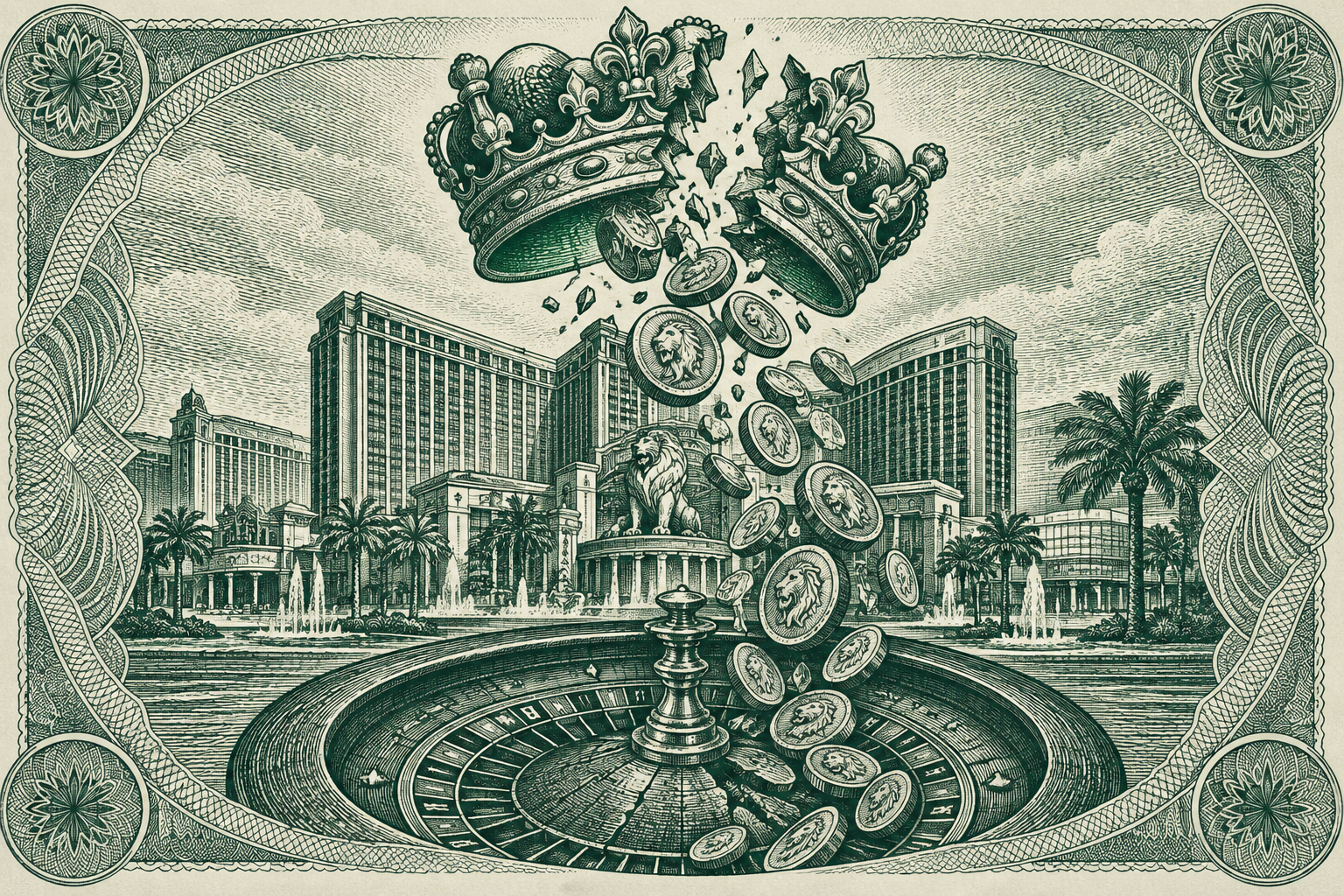
A takeover premium is not an operating result—and MGM Resorts International just provided a sharp reminder of the difference. Shares of MGM Resorts fell 9% after Barry Diller’s People Inc. rescinded its offer to acquire the remaining publicly held shares, stripping away the deal-related support that had helped underpin the stock.
For traders, the message is immediate: when deal certainty disappears, event-driven gains can reverse with remarkable speed. For fundamental investors, the more important question is what remains after the speculative M&A value is removed from the equation.
The development was reported by CNBC, which noted that People Inc. withdrew its offer for MGM Resorts. The 9% decline in MGM’s shares reflects the market’s reassessment of the company without that prospective transaction supporting the price.
The premium was conditional
A takeover premium exists only as long as the market believes a transaction may proceed. That makes it fundamentally different from revenue, operating earnings or cash flow. Those measures are tied to the company’s business performance; an M&A premium is tied to an external event and the perceived likelihood of completion.
Once People Inc. abandoned its offer, that conditional value was removed. The market did not need a new operating report from MGM Resorts to reprice the shares. The withdrawal itself changed the investment narrative, demonstrating how quickly an event-driven thesis can lose its central support.
This is the uncomfortable feature of merger-arbitrage-style positioning. The upside may appear attractive while a transaction remains credible, but the exposure is not limited to the company’s underlying operations. It also includes the possibility that the proposed deal disappears, leaving shareholders with a stock that must stand on its own fundamentals.
A warning for leisure and discretionary stocks
MGM’s decline offers a broader cautionary signal for value investors searching for M&A premiums in consumer discretionary and leisure companies. A stock can look inexpensive on a standalone basis and still trade higher because investors are assigning value to a potential acquisition. If that acquisition is withdrawn, the apparent bargain may be less compelling than the headline valuation suggested.
That does not determine MGM Resorts’ long-term business prospects. It does, however, reset the analytical task. With the People Inc. offer no longer supporting the shares, attention returns to MGM’s operating performance, cash-flow support and ability to generate value independently of a takeover.
Those fundamentals matter because they provide the durable framework for valuation after a deal thesis fails. The company’s underlying performance must now carry more of the burden that the takeover premium had previously carried. Whether MGM can do that is a question for business analysis, not event-driven speculation.
What the market is pricing now
The 9% decline indicates that shareholders had assigned meaningful importance to the proposed transaction. It also shows the asymmetry of takeover speculation: a deal can support a stock for a period, but its withdrawal can expose the gap between the acquisition narrative and the company’s standalone valuation.
The lesson is not that M&A premiums have no place in market analysis. It is that they should be treated as conditional, not permanent. MGM Resorts now offers a clear case study in why cash flow, operating execution and underlying fundamentals remain central when the deal catalyst vanishes.
Bull/Bear Verdict
Bull Case: MGM Resorts may regain investor attention if its operating performance and cash-flow support demonstrate value independent of the withdrawn People Inc. offer.
Bear Case: The 9% decline indicates that removing the takeover premium could leave MGM Resorts more exposed to questions about its standalone fundamentals and valuation.