
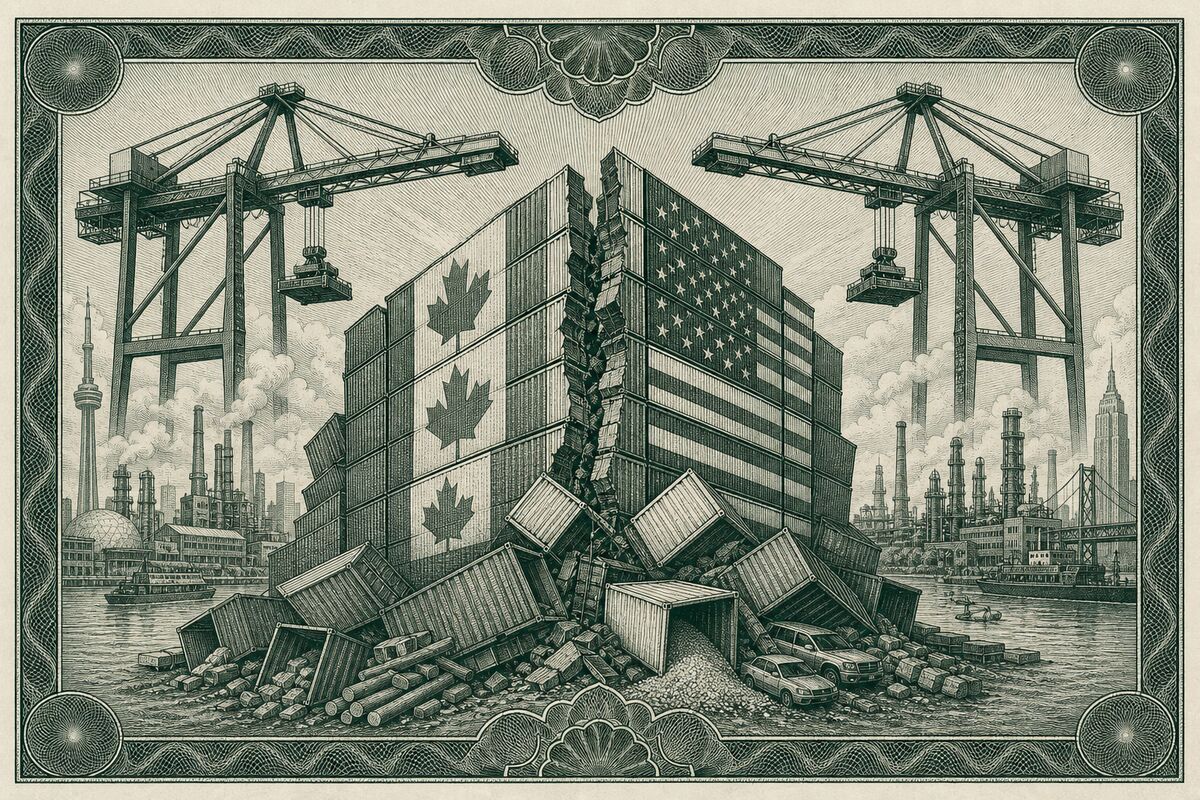
The abrupt collapse of U.S.-Canada trade talks has ignited significant market concerns, particularly following the news of a staggering 50% tariff imposed by the Trump administration on select Canadian exports. This dramatic turn of events not only reshapes the trade landscape but also poses profound implications for investors navigating the complexities of cross-border supply chains.
As reported by CNBC on August 22, the failure to reach a consensus last Friday has led to these punitive tariffs, which could have widespread ramifications on various sectors within the Canadian economy. The forthcoming press conference by Treasury Secretary Bessent is expected to provide further clarity, yet the immediate fallout suggests a turbulent period ahead for Canadian exporters and U.S. investors alike.
Impact on TSX-Listed Companies
The sectors most likely to feel the heat from these tariffs include energy, lumber, agriculture, and manufacturing. Each of these industries is a cornerstone of the TSX, and their exposure to U.S. markets makes them particularly vulnerable to such drastic measures. For instance, the lumber industry, already grappling with previous tariffs, could see its competitive edge further diminished, leading to potential declines in market valuations for companies within this space.
Moreover, Canadian energy firms, which have increasingly relied on U.S. markets for both export and investment, may now face heightened operational costs. This could lead to a reevaluation of growth projections among investors, particularly as margins tighten under the weight of increased tariffs.
Investor Sentiment and Market Performance
The sentiment among investors regarding Canadian stocks is likely to shift significantly in the wake of this announcement. The 50% tariffs could instill a sense of caution, prompting a reevaluation of positions in affected sectors. In an environment where uncertainty reigns, investors may retreat from riskier assets while seeking refuge in more stable investments.
This situation draws parallels to previous trade disputes, where investor confidence was quickly eroded. The market's reaction to such uncertainties can often amplify volatility, making it imperative for investors to remain vigilant and adaptable in their strategies.
Potential Responses from Canadian Exporters
In light of these tariffs, Canadian exporters are likely to explore a range of countermeasures. Some may seek to diversify their markets beyond the U.S. to mitigate the adverse effects of tariffs. Others might push for negotiations or explore strategies to absorb some of the tariff costs, thereby maintaining competitiveness.
For U.S. investors involved in cross-border supply chains, the implications are equally significant. Companies that rely on Canadian imports may need to reassess their supply chains and pricing strategies to accommodate the increased costs. This could lead to price adjustments for consumers and a potential slowdown in demand for certain products.
Conclusion
The imposition of 50% tariffs on Canadian exports marks a critical juncture in U.S.-Canada trade relations, one that could reshape the investment landscape for years to come. Investors must now grapple with the ramifications of these tariffs, not only for their portfolios but also for the broader economic environment.
As the dust settles, the future of trade talks remains uncertain, leaving investors to navigate a complex and shifting terrain.
Source: CNBC