
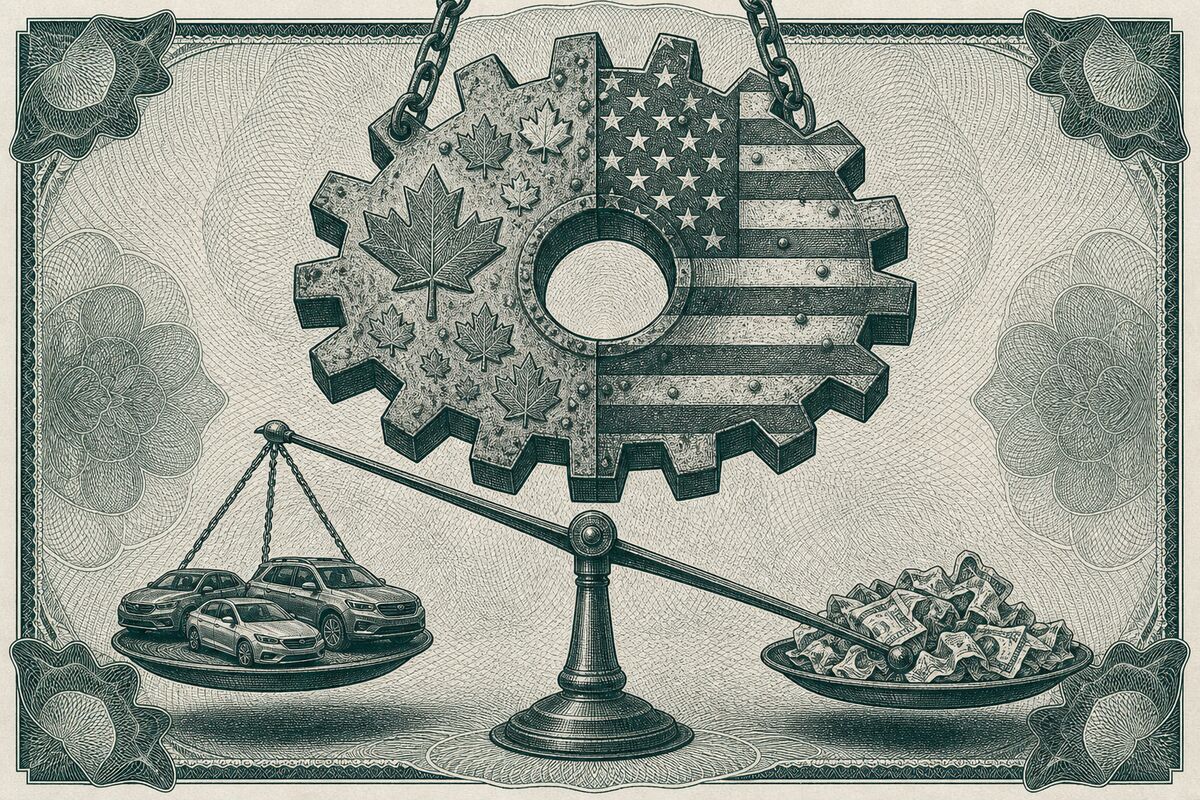
When it comes to trade, few moves are as audacious as a 50% tariff on auto imports. President Trump's recent proposal to impose such tariffs on Canadian vehicles, effective January 1, 2027, is not just a policy shift; it is a full-frontal assault on the Canadian auto industry and its intertwined U.S. partners. The implications of this move will resonate throughout the supply chain, impacting everything from production costs to consumer prices.
The announcement has sent shockwaves through the markets, already rattled by broader trade tensions and geopolitical strife. The S&P 500 and Nasdaq have both seen declines amid fears surrounding a potential trade war, with analysts warning that this kind of aggressive tariff could lead to a tit-for-tat response from Canada that could further destabilize investor confidence.
Impact on Canadian Auto Manufacturers
The Canadian auto industry, a vital cog in North America’s manufacturing landscape, stands to face significant challenges from these tariffs. Companies like $GM, $F, $STLA, and $TM, which rely on Canadian facilities for production, may see their operating costs spike as they grapple with the new tariff regime. This could lead to higher prices for vehicles and a potential drop in sales, particularly in the U.S. market where many Canadian-made cars are sold.
The proposed tariffs raise questions about the viability of current production strategies. Many Canadian manufacturers have historically benefited from a tariff-free trading environment with the U.S. The introduction of such steep tariffs could force these companies to reconsider their supply chain logistics, potentially relocating production facilities or scaling back operations, which in turn could lead to job losses and economic disruption in Canada.
Market Reactions and Economic Ramifications
The immediate market reaction has been negative, with the S&P 500 and Nasdaq slipping further amid rising trade tensions. Investors are shying away from stocks in the auto sector, reflecting fears that these tariffs could substantially impact earnings in the coming quarters. The broader economic implications cannot be overlooked either; higher tariffs could stoke inflationary pressures across the board, affecting not just the auto industry but other sectors reliant on cross-border trade.
Moreover, the timing of this announcement, coinciding with reports of a 7.5% tariff on Chinese goods ahead of crucial talks between Xi and Trump, indicates a potential escalation in trade hostilities that could have far-reaching impacts on global markets. This dual-pronged approach to tariffs suggests a strategy that could alienate key trading partners and exacerbate economic uncertainty.
The Bigger Picture
As we look ahead to 2027, it becomes increasingly clear that these tariffs could reshape the landscape of the auto industry in North America. Both investors and manufacturers will need to adapt to a new reality where the costs of doing business are likely to rise sharply. The risk of retaliatory measures from Canada could further complicate the situation, making it imperative for stakeholders to closely monitor developments as they unfold.
In conclusion, Trump's proposed auto tariffs represent a significant turning point for both the Canadian auto industry and its U.S. partners. Investors must brace for a period of volatility and uncertainty as the implications of these tariffs continue to unfold.
Source