
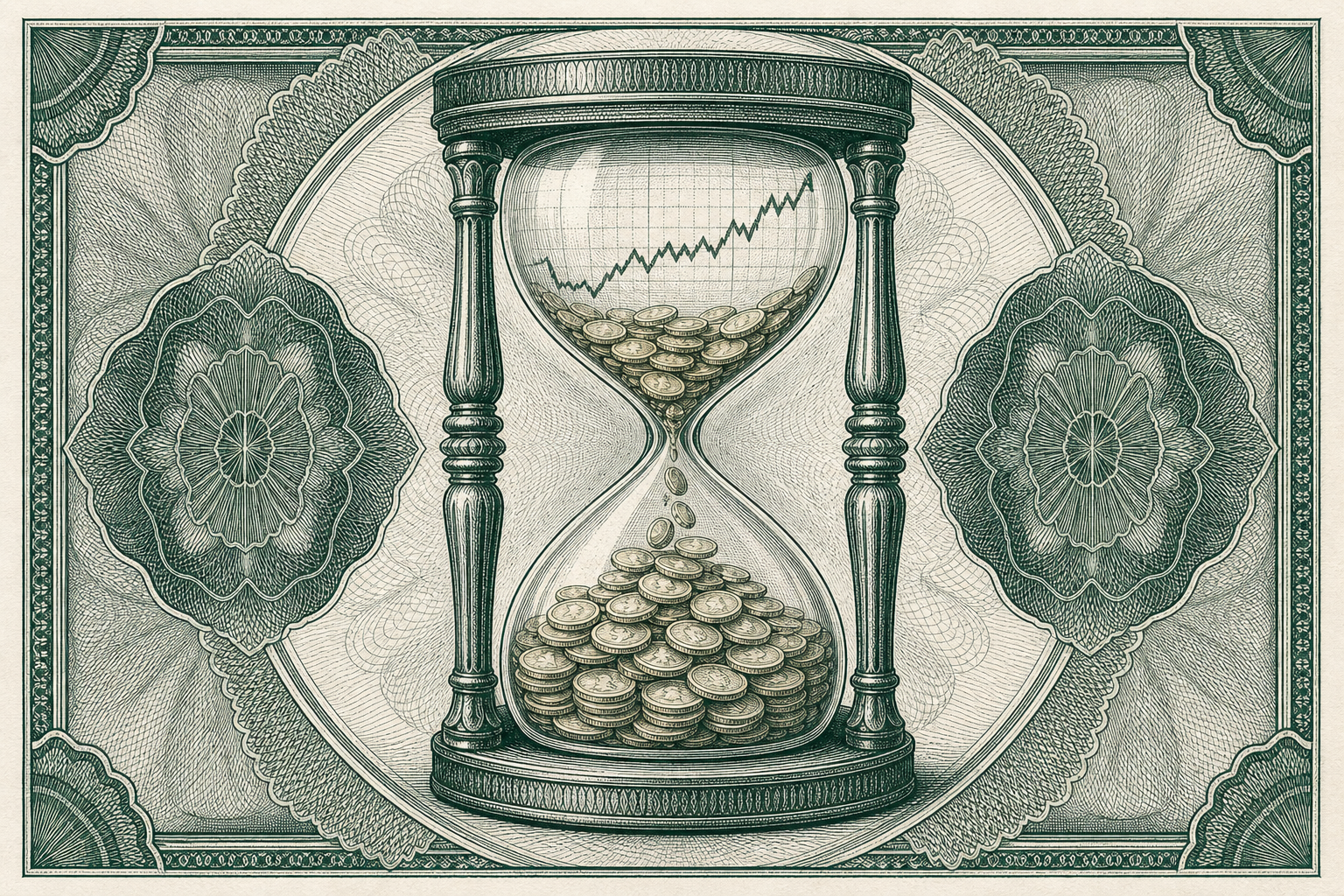
The latest Consumer Price Index (CPI) data for July has entered the fray, revealing a 3.4% annual increase that has investors recalibrating their expectations. With inflation still lurking like an unwelcome guest, the Fed's current interest rate strategy is under scrutiny. What does this mean for those holding assets in the stock market, particularly in a climate where higher rates may linger longer than anticipated?
The July CPI report, confirmed by CNBC, indicates a 0.1% monthly increase, reflecting a persistent inflationary environment that has many scratching their heads. The Federal Reserve has held rates steady in the 3.50%-3.75% range, but this stability has come with dissent, as three members voiced their disagreement with the decision. Such mixed signals from the central bank are creating a fog of uncertainty for investors.
The Fed's Balancing Act
The Fed is currently treading a fine line between fostering economic growth and keeping inflation in check. The July CPI data, which marks a continuation of elevated inflation levels, suggests that the central bank's hawkish stance may need to persist longer than many had hoped. With inflation stubbornly above the Fed’s target, the central bank's approach could be interpreted as a signal that rates might not drop anytime soon.
This dovetails with ongoing geopolitical tensions affecting oil prices, which have been more volatile and could fuel further inflationary pressures. Investors must consider how these elements interact: rising inflation combined with fluctuating oil prices could reshape investment strategies across the board.
Investment Strategies in a Higher-For-Longer Environment
For those invested in exchange-traded funds like $SPY and $QQQ, the implications of this CPI data could be significant. If inflation continues to rise, the Fed may be compelled to maintain higher rates, which could dampen economic growth and, by extension, corporate earnings. This scenario may lead to a more cautious investment strategy, where investors seek out sectors less sensitive to interest rate hikes.
On the other hand, those holding long-term bonds through vehicles like $TLT may face challenges as higher rates typically lead to lower bond prices. An environment characterized by rising inflation and persistent interest rates could lead to a reevaluation of fixed-income investments, prompting investors to ponder the viability of their portfolios.
Dissent Within the Fed: A Sign of Things to Come?
The dissent within the Fed adds another layer of complexity to the current landscape. With three members voting against the recent decision to hold rates steady, it’s clear that there are differing opinions on how best to tackle inflation. This internal conflict could signal a future of unpredictability in monetary policy, leaving investors to wonder how forthcoming rate changes could influence their strategies.
As the Fed navigates this turbulent landscape, the investment community is left to sift through the noise and determine what it means for their portfolios. Will higher rates persist, or will we witness a shift back to a more accommodative stance? The stakes have never been higher.
The Road Ahead
With inflation at 3.4% and the Fed’s mixed signals, the road ahead for investors is fraught with uncertainty. Strategies that once seemed solid may require a rethink in light of ongoing economic pressures. The reality is that the current environment demands a more agile approach to investing, one that can adapt to shifting economic indicators and geopolitical developments.
In conclusion, July's CPI data is not just a number; it’s a reflection of broader economic dynamics that could reshape investment strategies for the foreseeable future. As investors grapple with these developments, the key will be to stay informed and ready to pivot as new data emerges.