
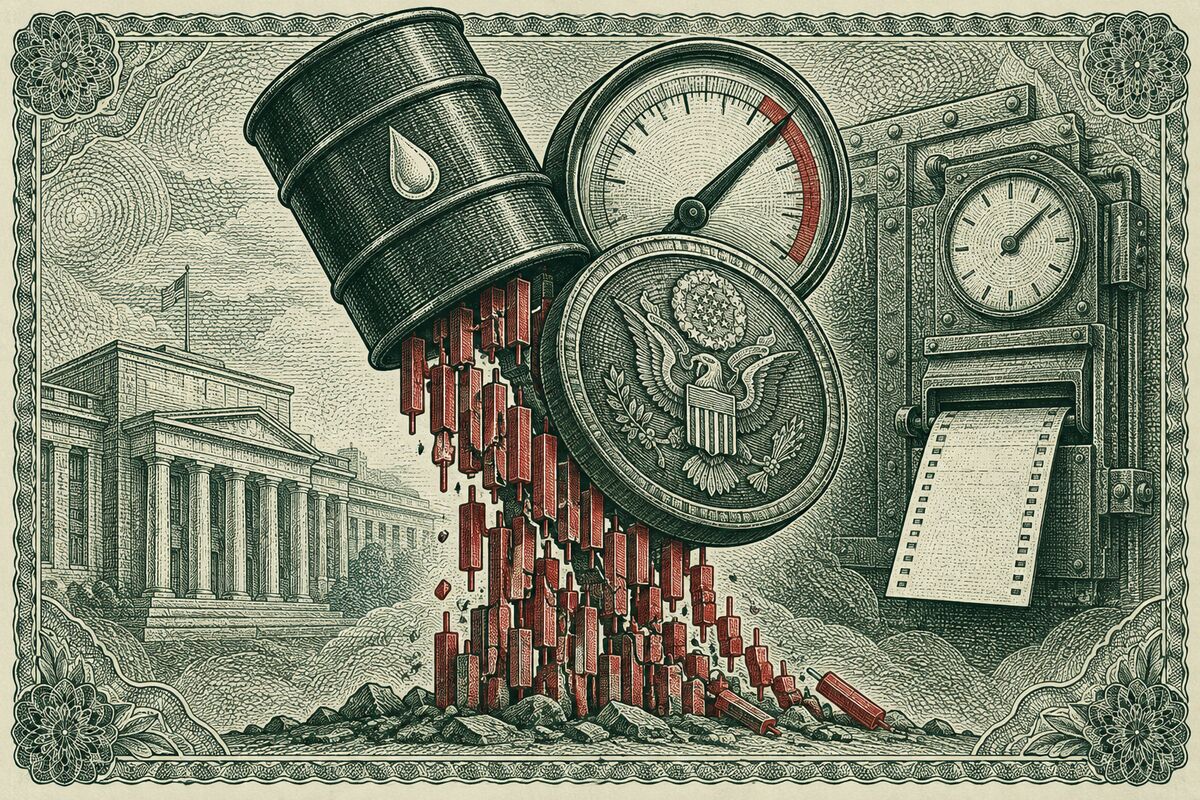
U.S. gasoline prices have fallen below $4 per gallon for the first time since July, giving household budgets a measurable point of relief at a moment when broader inflation data remains hot. The decline does not erase wider price pressure, but it can reduce one of the most visible and recurring costs facing consumers.
The market signal is unusually split: cheaper gasoline may support household spending, while oil prices rose roughly 1% after Iran said no nuclear material would leave the country. For investors watching the U.S. consumer and the Energy sector, the message is less a clean turning point than a contest between lower pump prices and renewed concerns about inflation, interest rates and energy-market volatility.
A direct, if limited, break for household budgets
Gasoline is a recurring expense, so a national average below $4 per gallon can provide relief even when other goods and services remain expensive. The benefit is direct: consumers paying less at the pump have more room in their budgets for other purchases, debt payments or savings. That effect may be particularly visible because fuel prices are easy to track and households encounter them frequently.
Still, the word “partial” matters. A lower gasoline price does not reverse increases elsewhere in the cost of living. If inflation remains hot across other categories, the household benefit from fuel may be absorbed rather than converted fully into new spending. The decline therefore works as a cushion, not a complete answer to the consumer’s inflation problem.
That distinction is important for market analysis. Lower gasoline prices can improve the spending capacity of some households, but they do not automatically indicate that consumer purchasing power has broadly recovered. The result may depend on how consumers allocate the relief and whether other prices continue to rise quickly.
Holiday spending gets a modest tailwind
Heading into the holiday season, cheaper gasoline could support consumer-facing businesses indirectly. A household that spends less on fuel may have greater flexibility for discretionary purchases, travel-related activity or seasonal shopping. The effect could also be psychological: a lower number at the pump may make the monthly budget feel less constrained even when inflation remains elevated elsewhere.
But the market should resist turning that possibility into a forecast of stronger retail demand. The source of the relief is narrow, and the broader inflation backdrop remains challenging. Consumers may use the savings to offset higher prices in other categories rather than increase total spending. That would still represent useful budget relief, but it would produce a smaller boost for discretionary businesses.
The same dynamic creates a nuanced setup for defensive retail and staples. These businesses may remain relatively important when households are managing persistent price pressure, while cheaper gasoline could reduce some of the strain on overall budgets. Yet lower fuel costs do not by themselves establish a change in consumer behavior, and they do not justify broad conclusions about sector earnings.
Why the oil move complicates the picture
The roughly 1% rise in oil prices introduces a separate market effect. Consumers respond to gasoline prices at the pump, while energy-market investors also watch the upstream commodity backdrop. Those two indicators can move in different directions over a given period, as this development illustrates: gasoline has fallen below $4 per gallon even as oil prices rose roughly 1% following Iran’s statement.
That divergence makes the Energy sector harder to read from the consumer headline alone. Lower gasoline prices may be favorable for drivers and potentially supportive of consumer budgets, but higher oil prices can change the outlook for energy companies in a different way. The direct benefit to consumers should not be treated as a direct earnings signal for the entire Energy sector.
Nor should the oil move be read as a guaranteed indication of where gasoline prices will go next. The stated trigger was a geopolitical development involving Iran, and the reported response was an approximately 1% increase in oil prices. That is enough to highlight sensitivity to headlines, but not enough to establish a durable trend in either fuel prices or energy-sector performance.
Inflation and rate-hike concerns remain the larger test
The key tension for U.S. markets is that lower gasoline prices can help the consumer while failing to resolve the inflation problem that drives interest-rate expectations. If broader inflation data stays hot, policymakers and investors may continue to focus on the possibility of higher rates or a more restrictive policy environment. Cheaper fuel would then operate as a narrow offset against a wider macroeconomic concern.
That tension affects the consumer outlook in two directions. On one side, lower pump prices may provide households with more near-term flexibility. On the other, rate-hike concerns can weigh on borrowing costs, confidence and interest-sensitive spending. The gasoline decline is therefore constructive at the household level, but its market impact may be limited if inflation remains persistent.
For investors, the most useful conclusion is a disciplined one: the move below $4 per gallon is meaningful because it marks the first national-average reading below that level since July, but it should be evaluated alongside the hotter inflation backdrop and the roughly 1% oil increase. The data supports a partial consumer cushion, not a full reset in the U.S. economic outlook.
What the signal means for markets
Consumer-facing stocks may receive a sentiment benefit if households translate fuel savings into seasonal spending. Defensive retail and staples may also remain relevant as consumers balance essential purchases with persistent inflation. However, the available evidence does not establish how large the spending response will be or whether it will meaningfully alter company results.
The Energy sector presents the clearest counterpoint. A lower gasoline price may be welcomed by consumers, while the oil increase highlights the separate forces that can influence energy markets. The two developments should be analyzed independently: one describes direct relief for drivers, and the other reflects a commodity-market response to a geopolitical statement.
That separation keeps the analysis grounded. A gasoline price below $4 per gallon may ease pressure on household budgets and offer a modest tailwind heading into the holidays. Yet the broader market still has to contend with hot inflation data, rate-hike concerns and oil-price sensitivity. Until those forces become more aligned, the consumer benefit is best viewed as a partial cushion rather than a decisive change in the market regime. CNBC reported the move below $4 per gallon, underscoring both the relief at the pump and the limits of reading too much into one price point.
Bull/Bear Verdict
Bull Case: Gasoline falling below $4 per gallon for the first time since July may give households additional flexibility heading into the holiday season and could provide a modest lift to consumer-facing spending.
Bear Case: Hot inflation data and rate-hike concerns may limit the benefit of cheaper gasoline, while the roughly 1% rise in oil prices shows that the Energy sector and fuel outlook remain exposed to geopolitical developments.