
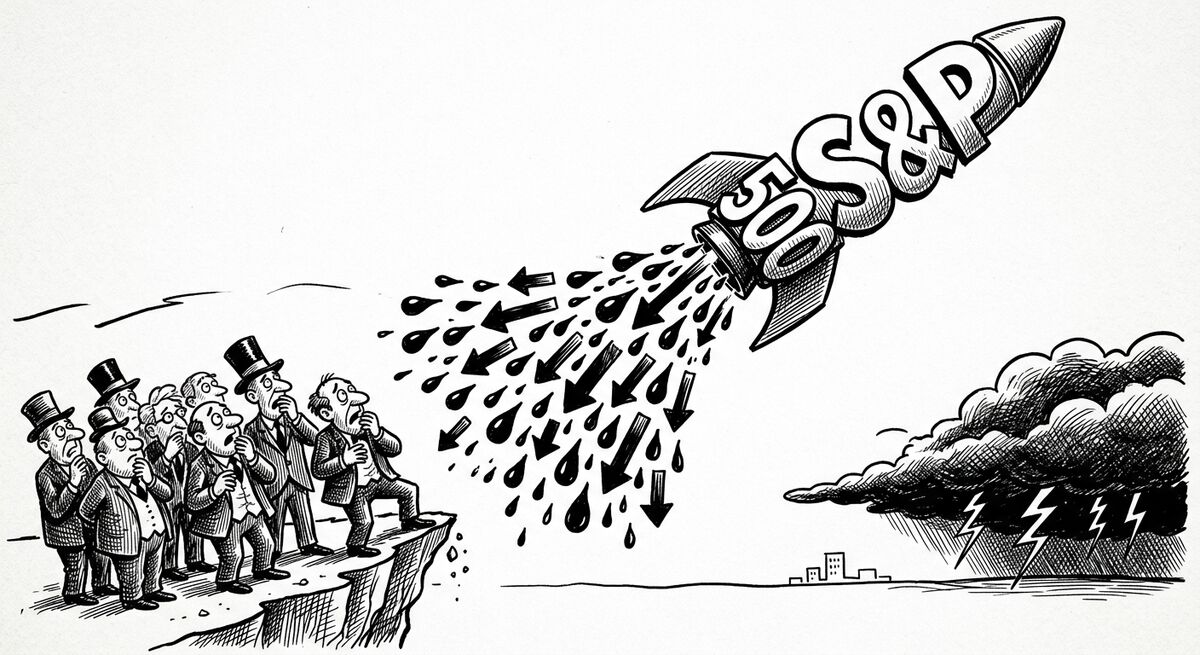
On April 8, 2026, the S&P 500 ($US500) surged 2.52%, reaching 6,783 points—a striking rebound for a market that had seen a slight decline of 0.19% over the past month. This impressive rally was largely driven by a significant crash in oil prices, which was triggered by news of a ceasefire between the U.S. and Iran. While this may seem like purely good news, investors should tread carefully as the ramifications of such rapid market movements can be complex.
U.S. stock futures experienced gains of up to 3.5% on the news, a clear indication that traders were reacting positively to the prospect of falling oil prices. However, as any seasoned trader will tell you, such sharp upward movements often come with a dose of caution. The initial excitement around the oil crash is fueled by the revival of hopes for Federal Reserve rate cuts, which in turn have boosted Treasury yields.
Immediate Market Reactions
The drop in oil prices can be perceived as a double-edged sword. On one hand, lower oil prices can lead to reduced costs for consumers and businesses, potentially spurring economic growth. On the other hand, they may signal underlying issues in the global economy, particularly in oil-dependent regions. Furthermore, while the notion of a rate cut may seem beneficial, it is essential to consider why such a measure might be on the table in the first place.
Investors should note that the S&P 500's recent rally does not negate the broader economic concerns that persist. For instance, while the index remains 24.31% higher than a year ago, it has shown signs of volatility, and today’s gains might not be sustainable. The market's reaction to the news of a ceasefire could easily lead to over-optimism, especially if the geopolitical landscape shifts again.
Sector Performance and Trading Strategies
In terms of sector performance, lower oil prices typically benefit industries such as transportation and consumer goods, where decreased fuel costs can enhance margins. However, sectors like energy may suffer in the short term, as falling oil prices can impact profitability. Traders should consider adjusting their strategies accordingly, perhaps focusing on sectors that historically thrive amid falling oil prices.
Moreover, the increase in stock prices might encourage some investors to jump into the market, driven by the momentum of the rally. However, this could be a classic case of chasing returns, which is fraught with risk. Traders should weigh the potential for gains against the backdrop of economic uncertainties and geopolitical tensions that could easily reverse these trends.
In conclusion, while the S&P 500's jump signals a moment of optimism, traders must remain vigilant. The interplay of falling oil prices, potential Fed rate cuts, and the broader economic landscape presents a complex tapestry that could unravel just as quickly as it has risen. Therefore, prudent investors would be wise to adopt a measured approach, balancing the allure of short-term gains with the inherent risks that lie ahead.