
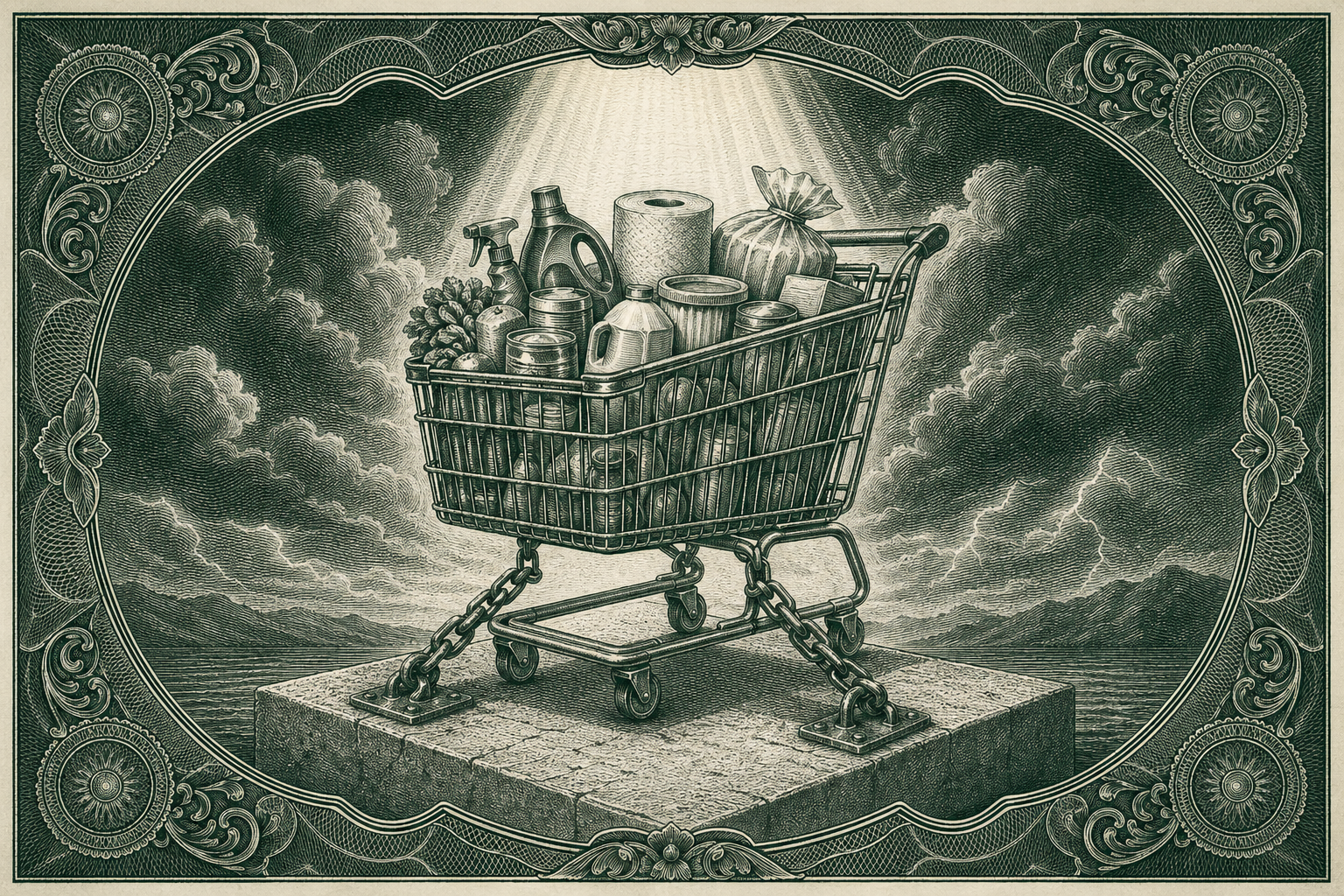
In the intricate dance of retail, where the rhythm can shift from buoyant to bleak in the blink of an eye, a select few brands have mastered the art of resilience. As economic clouds darken and consumer confidence wavers, investors often turn their gaze towards defensive stocks. The stalwarts of this sector—$COST, $WMT, and $TJX—have emerged as beacons of stability. Let’s delve into how these companies leverage structural advantages to thrive, even when the broader economy falters.
The Defensive Triumvirate
When the economy hits a rough patch, consumers typically tighten their belts, favoring essential goods over luxury items. Enter the defensive leaders: Costco ($COST), Walmart ($WMT), and TJX Companies ($TJX). These retailers are not just surviving; they are thriving, powered by strategic advantages that allow them to weather economic storms with aplomb.
Costco, with its membership model, creates a fortress-like loyalty among shoppers. The annual fees that customers willingly pay serve as a steady revenue stream, cushioning the business against downturns. Meanwhile, Walmart, the giant of everyday low prices, continues to draw consumers seeking value during strained times. The epicenter of affordability, Walmart's extensive supply chain and geographic reach further enhance its ability to deliver essential goods, ensuring that it remains the go-to store for cash-strapped families.
Then there’s TJX Companies, the parent of discount retailers like T.J. Maxx and Marshalls. In a world where consumers are increasingly price-sensitive, TJX’s treasure-hunt shopping experience draws in bargain hunters eager for deals. Its agile buying strategy allows it to stock inventory at reduced prices, making it a magnet for shoppers who still want quality without the hefty price tag.
Structural Advantages in a Shifting Landscape
What sets these retailers apart is their ability to adapt and thrive through various economic cycles. Their structural advantages are as robust as they are diverse. E-commerce, once seen as a supplementary channel, has exploded into a primary growth driver. With the pandemic accelerating online shopping habits, these companies have adeptly pivoted to enhance their digital presence. Walmart and Costco have invested in their online platforms, ensuring that they capture a larger share of the e-commerce pie.
The membership model employed by Costco not only reinforces customer loyalty but also incentivizes bulk purchases, which align perfectly with the frugal mindset that often accompanies economic downturns. The allure of savings is hard to resist, and Costco has cleverly positioned itself to capitalize on this urge.
The Recession-Proof Investment Strategy
In the realm of investing, recession-proof strategies are akin to fortified bunkers—designed to withstand the pressures of economic decline. As we look towards the horizon, the importance of companies like $COST, $WMT, and $TJX cannot be overstated. Their structural advantages, e-commerce evolution, and entrenched market positions suggest that they could provide a safety net for investors seeking stability amid uncertainty.
However, it’s essential to remember that no investment is immune to risk. While these retailers may be well-equipped to handle downturns, the broader economic environment can still impact performance. A slowdown in consumer spending, inflationary pressures, or shifts in market dynamics could pose challenges, even for these retail giants.
In conclusion, as the markets swirl with uncertainty, defensive retail stocks like Costco, Walmart, and TJX Companies shine bright, demonstrating their ability to thrive during economic downturns. Their structural advantages and strategic adaptations suggest a robust position in any recession-proof investment strategy, but investors must remain vigilant and informed.
Bull/Bear Verdict
Bull Case: The structural advantages of $COST, $WMT, and $TJX could position them favorably to capture increased consumer spending during downturns, bolstered by strong e-commerce strategies.
Bear Case: Economic pressures like inflation and reduced consumer spending could still impact these retailers, potentially leading to slower growth despite their defensive posturing.