
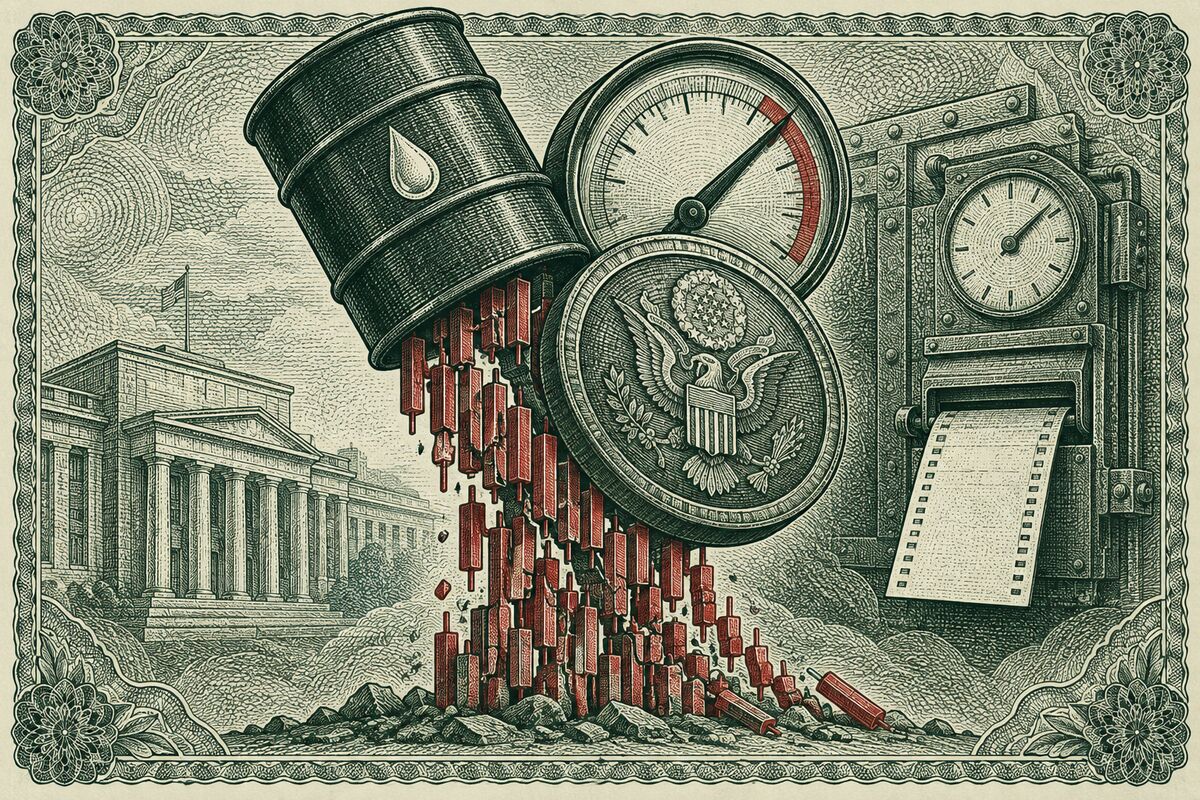
Wall Street’s latest headache arrived as a three-part squeeze: higher oil prices, rising Treasury yields and a firmer dollar. Together, the moves reduced investors’ appetite for risk and pushed US stocks lower, leaving the S&P 500 and Dow Jones facing a market backdrop with little room for complacency.
The next major test is the closely watched US jobs data. Traders are positioning around the report because its reading on the labor market could reshape expectations for the Federal Reserve’s policy path, particularly at a moment when energy costs are adding a fresh layer of inflation uncertainty.
According to Reuters, US stocks declined as higher oil prices and rising Treasury yields weighed on investor sentiment. The S&P 500 and Dow Jones were at the center of that pressure, though the available reporting does not provide point changes or percentage declines for either index.
Oil turns the inflation dial
Middle East supply concerns continued to push oil prices higher. That move matters beyond the energy market: more expensive fuel and related costs can threaten household spending while also pressuring corporate margins. The result is a potentially stagflationary headwind — a particularly awkward combination for equities because it can weaken growth expectations while making inflation harder to dismiss.
For traders, oil is therefore doing more than flashing a commodity signal. It is feeding uncertainty about how persistent price pressures could be and how much flexibility the Federal Reserve may have if economic conditions cool. Higher energy costs may also complicate the market’s assessment of consumer resilience, even before the jobs data supplies a clearer read on employment.
Yields and the dollar tighten the financial backdrop
Rising Treasury yields added another weight to risk appetite. The dollar also firmed near a two-month peak as oil and US yields rose. That combination suggests markets are demanding a higher level of caution: yields raise the importance of interest-rate expectations, while a stronger dollar can reinforce broader financial conditions.
The jobs report now stands as the catalyst capable of moving those expectations. A labor-market signal viewed as strong could keep attention on inflation and the possibility of a less accommodative policy path. A softer signal could shift the conversation toward economic momentum and the scope for future policy support. The market’s reaction, however, will depend on how traders weigh employment against the oil-driven inflation threat.
Gold waits in the wings
Gold ticked higher after reaching a more than seven-week low, as traders positioned around upcoming US economic data. Its move adds another tell to a market waiting for confirmation rather than conviction.
For the S&P 500 and Dow Jones, the setup is straightforward but uncomfortable: energy costs are rising, Treasury yields are climbing, the dollar is firm, and the jobs data is still ahead. Until that report arrives, investors may continue to treat every market move as a referendum on whether inflation or growth presents the greater threat.
Bull/Bear Verdict
Bull Case: If the upcoming US jobs data eases concerns about persistent inflation and the Federal Reserve’s policy path, it could give the S&P 500 and Dow Jones room to recover from the pressure created by higher oil prices and Treasury yields.
Bear Case: Continued Middle East supply concerns could keep oil prices elevated, while rising Treasury yields and a dollar near a two-month peak may deepen the stagflationary pressure on consumer spending, corporate margins and the S&P 500 and Dow Jones.