
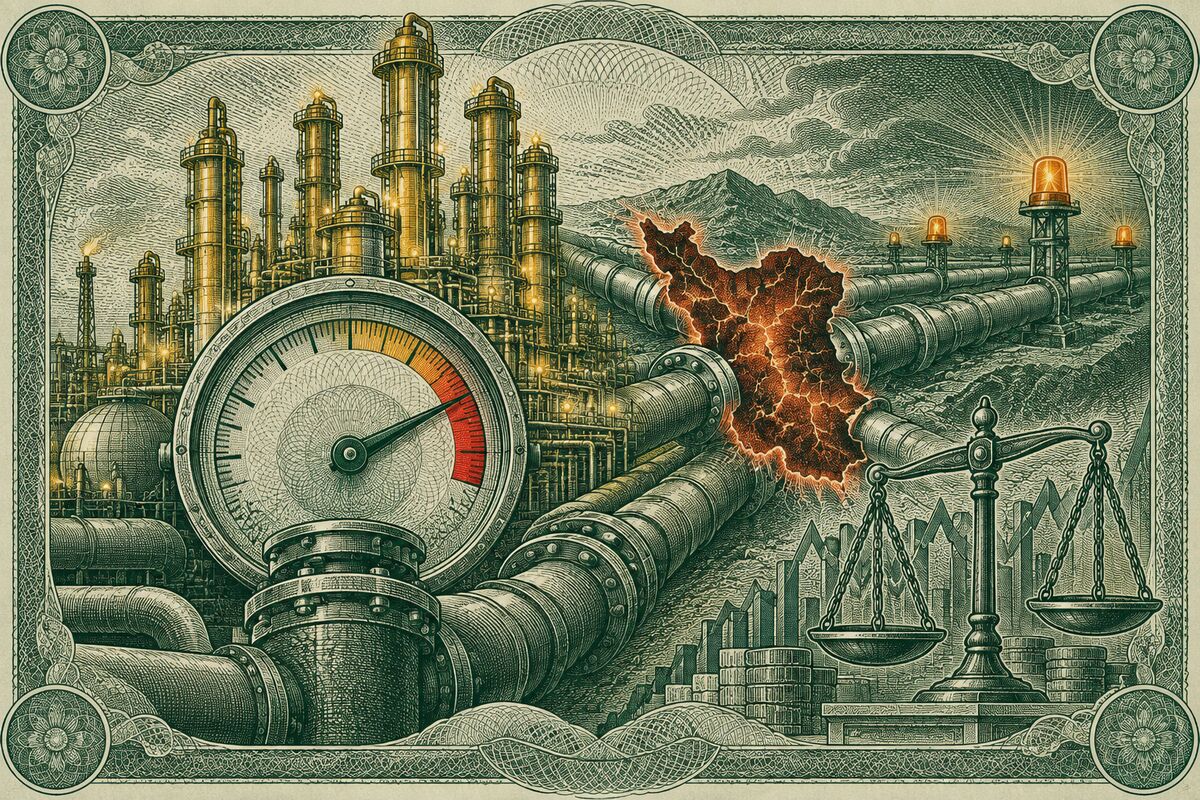
Oil markets are pricing geopolitical risk faster than policymakers can dismiss it. Crude jumped 2% and settled at six-month highs as concerns over a potential escalation involving Iran turned the Strait of Hormuz into the market’s central supply-risk question.
The signal from OPEC+ is equally important: the group is set to keep oil output targets steady, according to Reuters-cited sources. That combination—steady official supply targets and rising shipping anxiety—leaves traders focused on what could happen to physical flows rather than simply what producers have promised.
Hormuz risk changes the market’s arithmetic
The latest tension centers on reported tanker incidents involving limpet mines and claims from the IRGC Navy that tanker fires occurred. These reports have intensified concern about the Strait of Hormuz, a crucial maritime chokepoint for global energy shipments. The immediate market implication is not necessarily a confirmed disruption. It is the possibility that insurers, ship operators and traders may demand a larger risk premium for moving energy through the region.
That distinction matters. Oil can rise on the prospect of disruption well before barrels are physically removed from the market. If tensions escalate, freight, insurance and routing costs could become part of the price equation. If they ease, some of that geopolitical premium may retreat. For now, the market is responding to uncertainty, and uncertainty tends to travel quickly through futures contracts.
What steady OPEC+ targets mean for North American energy
For US and Canadian energy companies, higher crude prices may support revenue and earnings expectations, particularly for producers with direct exposure to oil prices. The benefit would not be uniform. Companies also face service costs, transportation expenses and capital-allocation decisions that can absorb part of the improvement in underlying commodity prices.
OPEC+’s decision to hold output targets steady adds another layer. It suggests the producer group is not immediately responding to the latest geopolitical anxiety with a new supply adjustment. That may leave the market more sensitive to headlines from the Strait of Hormuz, while giving North American producers a potentially more prominent role in investor discussions about supply security.
Still, investors should separate a higher futures price from a guaranteed improvement in corporate results. The persistence of the move, the quality of the crude exposure and the cost structure of individual businesses would all matter. A six-month high is a clear market signal, but it is not a complete earnings forecast.
Transportation and inflation are the next transmission channels
Energy prices do not stay confined to the oil patch. More expensive crude may raise fuel costs for airlines, trucking companies, delivery networks and other transportation-intensive businesses. Those pressures could filter into goods and services prices, especially if elevated energy costs persist rather than reverse quickly.
That is where inflation expectations become important for broader US and Canadian markets. A temporary oil spike may have a limited macroeconomic effect. A sustained increase could make inflation data more difficult to interpret and complicate expectations for interest-rate policy. In the United States, the Federal Reserve could face a less comfortable trade-off if energy costs lift headline inflation while higher transportation expenses weigh on demand.
Interest-rate-sensitive assets may therefore react not only to crude prices but also to the bond market’s interpretation of their persistence. Higher inflation expectations could pressure rate-sensitive parts of the market, while any deterioration in growth expectations could pull in the opposite direction. The result may be volatility rather than a clean, one-way trade.
A geopolitical hedge, not a simple defensive label
For conservative investors examining energy and commodity-linked holdings as a geopolitical hedge, the current episode illustrates both the appeal and the limitation of that approach. Energy exposure may respond favorably when supply-risk premiums expand, but the same geopolitical shock can raise costs elsewhere in the economy and increase uncertainty across portfolios.
The more durable question is whether the Strait of Hormuz reports lead to an actual supply disruption or remain a source of elevated fear. Until that becomes clearer, OPEC+’s steady output stance and oil’s 2% move to six-month highs leave markets balancing two competing forces: disciplined producer policy and an increasingly expensive geopolitical risk premium.
Bull/Bear Verdict
Bull Case: Oil’s 2% jump to six-month highs and steady OPEC+ output targets could support US and Canadian energy-sector earnings if Strait of Hormuz supply-risk concerns remain elevated.
Bear Case: Reported tanker incidents and higher crude prices could increase transportation costs, lift inflation expectations and place additional pressure on interest-rate-sensitive assets if the tension persists.