
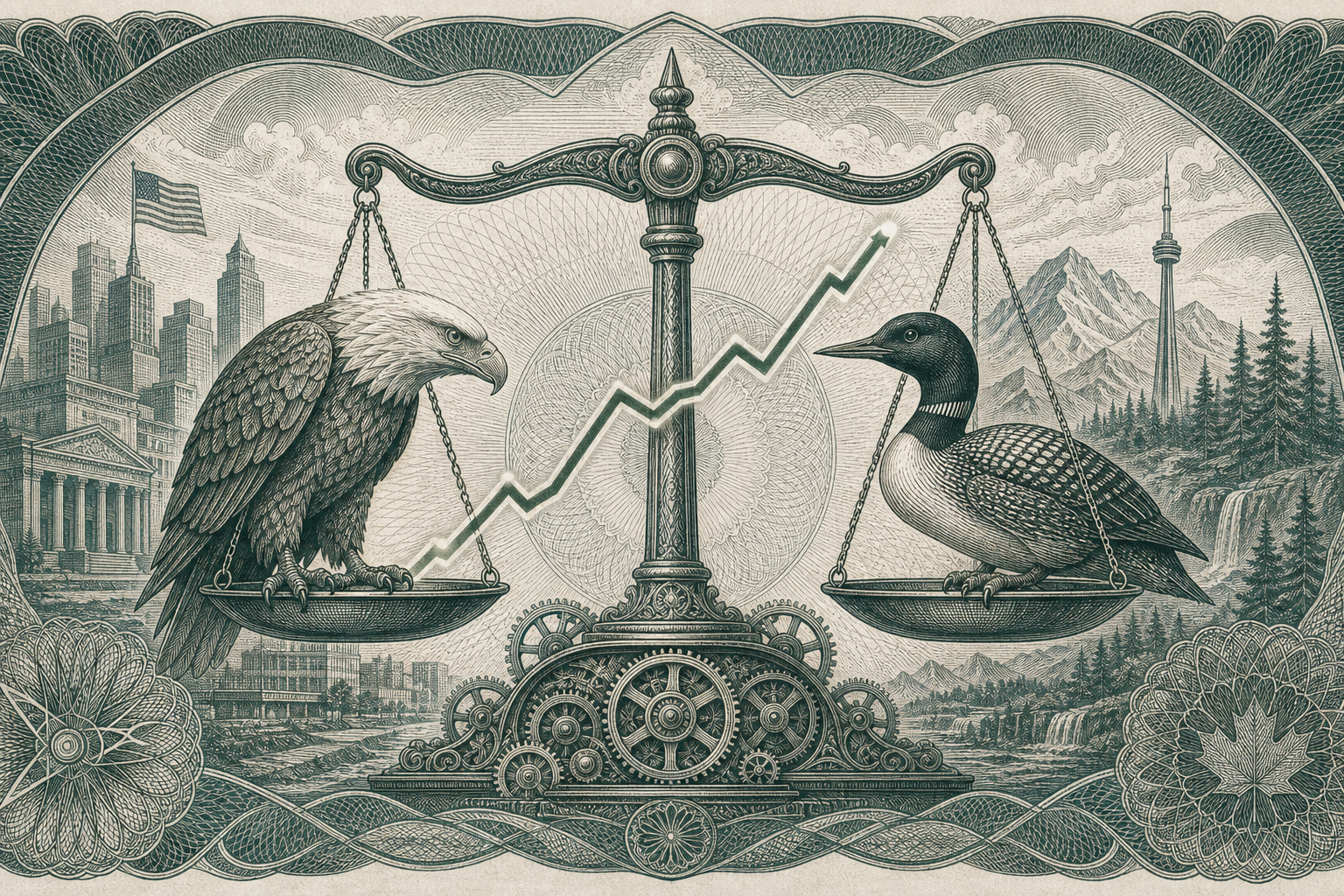
The Federal Reserve's decision to raise interest rates to 4.00% is nothing short of a watershed moment for both the US and Canadian markets. As inflation reaches a three-year high, the implications for equity valuations and investor sentiment are profound and far-reaching. This move is not just a reaction to current economic pressures, but a signal of the Fed's tightening stance, which could reshape market dynamics for months to come.
Equity valuations, particularly for growth stocks, are poised to feel the squeeze as rising short-end Treasury yields begin to bite. With the market pricing in a potential further increase to 4.2% by December, investors must reassess their portfolios in light of these new realities, especially as sectors such as utilities, REITs, and financials stand at the forefront of this shifting landscape.
Implications for Equity Valuations
The Fed's hike from 3.75% to 4.00% is indicative of a broader strategy to combat inflation. The immediate effect on equity valuations cannot be overstated; as interest rates rise, the cost of capital increases, which tends to compress equity multiples. This is particularly true for growth stocks, whose valuations are often predicated on future earnings potential rather than current cash flow.
When Treasury yields rise, it effectively creates a higher hurdle rate for these growth companies. Investors may start to question whether the lofty valuations of names in sectors like technology are justified, leading to potential corrections. In this environment, established companies with robust cash flows may fare better as investors flock to perceived safety.
Sector Impact Analysis
Different sectors will react variably to these rate changes. Utilities and Real Estate Investment Trusts (REITs), which typically rely on low borrowing costs to finance their operations and growth, could experience immediate pressure as rates rise. The income generated by these sectors becomes less attractive compared to the new yield environment offered by Treasuries.
On the flip side, financials may benefit from higher rates, as banks can expand their interest margins. However, if inflation continues to climb, the specter of stagflation looms large, which could dampen consumer spending and economic growth—factors that banks must consider as they navigate this complex landscape.
The Stagflation Threat
The potential for stagflation—characterized by stagnant economic growth coupled with high inflation—poses a significant threat to investor sentiment. As inflation hits a three-year high, worries abound that rising costs could stifle consumer demand, leading to a slowdown in economic activity. This scenario could create a vicious cycle where higher rates fail to contain inflation while simultaneously choking off growth.
Investor sentiment, already fragile, could turn bearish if stagflation takes hold. Historical parallels suggest that markets tend to struggle under these conditions, as evidenced by the 1970s crisis. The challenge for investors will be to navigate this uncertain terrain while seeking refuge in sectors that can weather such economic storms.
In conclusion, the Federal Reserve's recent rate hike is a clarion call for investors across the North American landscape. With inflation at a three-year high and the potential for further increases, the implications for equity valuations are significant. Investors must remain vigilant and adaptable, recognizing that the conditions set forth by the Fed are likely to shape market dynamics for the foreseeable future. For a deeper dive into this analysis, consider reviewing the insights provided by MC Markets.
Bull/Bear Verdict
Bull Case: If inflation stabilizes and growth remains resilient, sectors like financials could outperform as they benefit from higher interest rates.
Bear Case: Continued inflation and the threat of stagflation could lead to a significant decline in equity valuations, particularly for growth stocks and interest-sensitive sectors.