
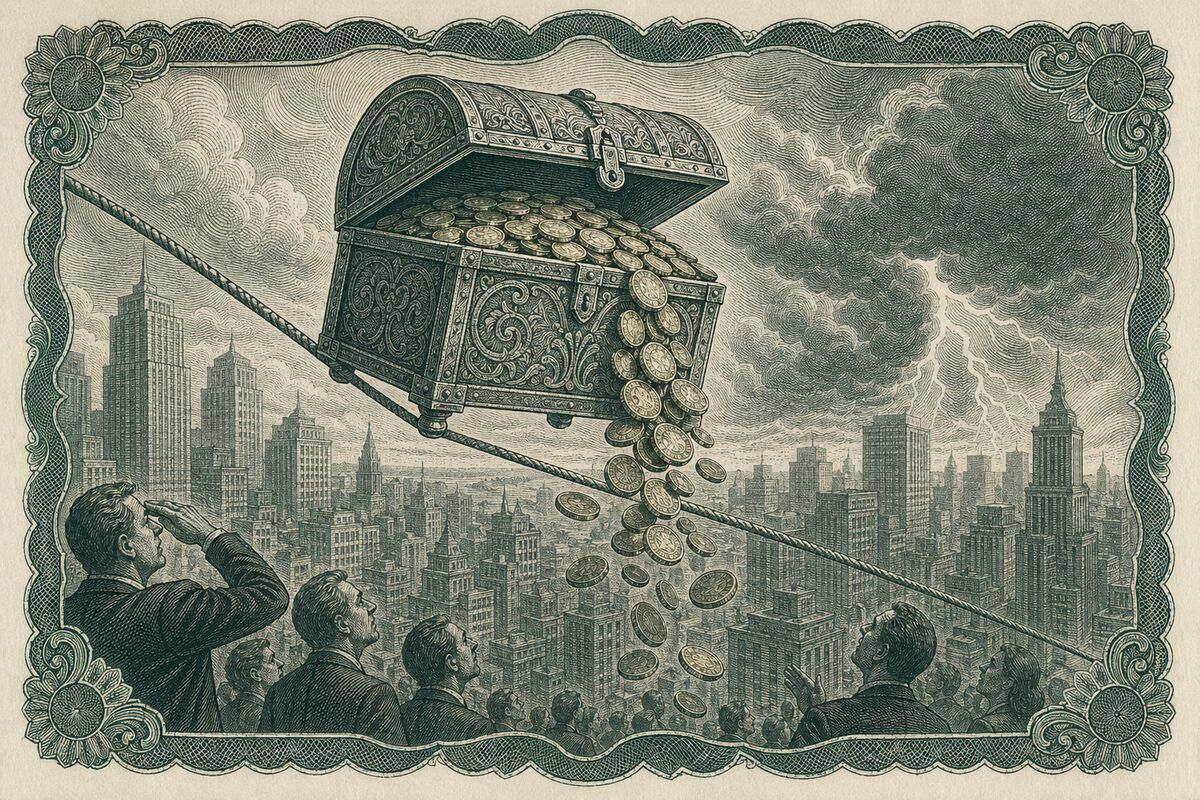
It's a curious paradox that gold, often the stalwart of safe-haven investments, has recently tumbled to a three-week low. Despite a backdrop of geopolitical tensions and central bank maneuverings, investors are witnessing an unexpected decline in the yellow metal’s value. This begs the question: what’s really going on in the gold market?
Historically, gold has thrived in times of uncertainty, serving as a hedge against inflation and currency fluctuations. Yet, the current dynamics paint a different picture. As central banks globally grapple with the implications of rising interest rates, the allure of gold seems to be diminishing. With central banks tightening monetary policies, the opportunity cost of holding non-yielding assets like gold has increased, prompting a reevaluation by investors.
Furthermore, the correlation between rising oil prices and declining gold cannot be overlooked. While oil prices have surged, driven by supply constraints and geopolitical unrest, gold has struggled to maintain its footing. This dynamic suggests that investors may be gravitating toward commodities that offer more immediate returns or hedges against inflation, like oil, rather than traditional safe-haven assets such as gold.
The interplay of these factors illustrates a shift in market dynamics, challenging the long-standing tradition of viewing gold as the ultimate safe-haven asset. In an environment where inflationary pressures are met with interest rate hikes, the historical safe-haven strategies might require a rethink. Investors now need to consider the implications of oil price movements and monetary policy decisions on their gold holdings.
As we navigate this complex landscape, it becomes increasingly clear that traditional perceptions of safety are evolving. Investors must adapt their strategies to reflect the changing tides in global economics. With central banks potentially continuing their tightening cycles, the question remains whether gold can reclaim its position as a reliable safe haven. For now, the metal finds itself at a crossroads, caught between rising demand and shifting market sentiments.
In conclusion, the recent decline in gold prices highlights the necessity for investors to reassess their approach to safe-haven assets. The interplay between oil prices, central bank policies, and geopolitical tensions is reshaping the investment landscape, suggesting that the old rules may not apply in the current environment.