
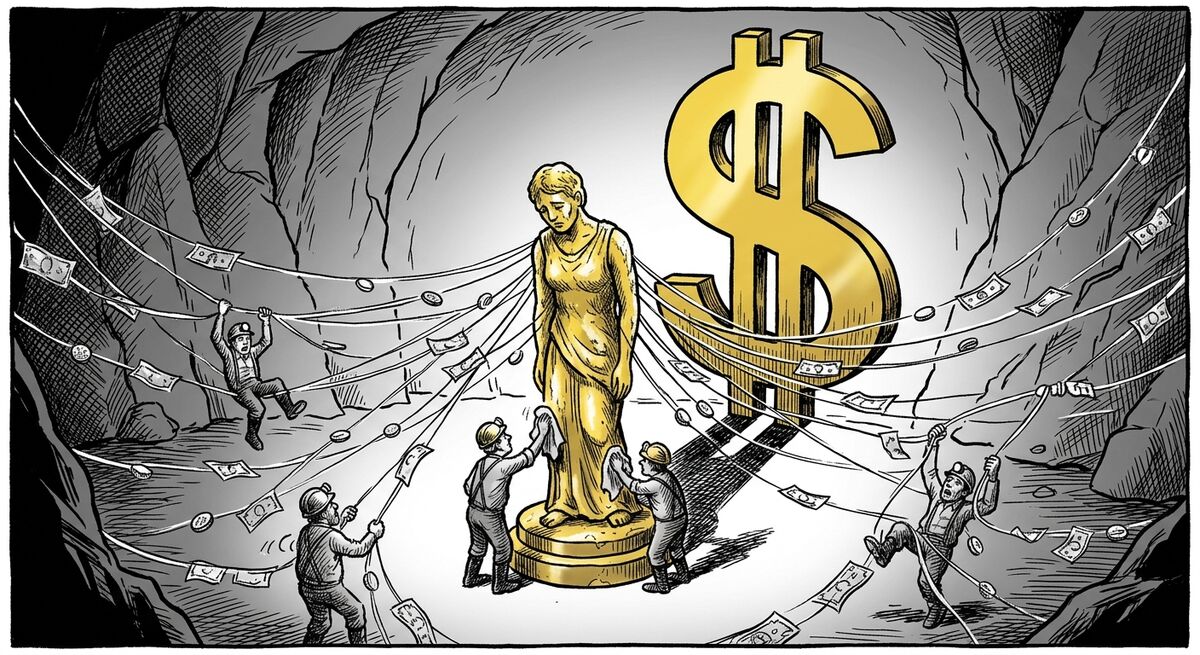
Gold, once the crown jewel of safe-haven assets, is losing its luster in the face of an increasingly bullish US dollar and rising interest rate expectations. Traders and investors need to grasp that gold is now a 'high-beta asset' with a compromised safe-haven status. This shift is reshaping market dynamics and challenging those who still cling to the age-old belief that gold is a foolproof hedge against turmoil.
The Compromised Safe-Haven Status of Gold
Historically, gold has been revered as a sanctuary during tumultuous times. However, the current market landscape is rewriting that narrative. Increased volatility in the markets, combined with diminishing geopolitical tensions, has led to a decline in gold's safe-haven premium. The recent easing of US-Iran tensions, coupled with optimistic forecasts regarding conflict resolution, has contributed to a stock market rally and a stronger dollar. In this environment, gold's allure is waning.
Inverse Correlation: Gold, the US Dollar, and Treasury Securities
The relationship between gold and the US dollar is a classic case of inverse correlation. As the dollar strengthens, gold typically weakens, and the current trend is no exception. With the US dollar index gaining ground, traders are witnessing a marked decline in gold prices. In tandem, rising yields on Treasury securities are attracting risk-averse investors, further diverting capital away from gold. The dynamics at play are clear: as the dollar shines brighter, gold's glow dims.
The Stock Market Gains and Strengthening Dollar
Optimism surrounding a potential resolution in the US-Iran conflict is propelling stock market gains, leading to a bullish sentiment that spills over to the dollar. The expectation that geopolitical tensions might ease has ignited a wave of risk-on behavior among investors. With the stock market climbing, the dollar finds itself in a favorable position, leaving gold struggling to maintain its ground.
Rising Oil Prices and Higher-For-Longer Interest Rate Fears
Adding fuel to the fire is the surge in oil prices, which raises concerns about inflation and prompts fears of a 'higher-for-longer' interest rate environment. These factors weigh heavily on gold's price movements. As oil climbs, so do expectations for sustained interest rates that could further impact gold's viability. In a world where higher borrowing costs become the norm, the opportunity cost of holding gold increases, leading to diminished demand for the yellow metal.
Conclusion: A Shifting Landscape
In conclusion, the safe-haven status of gold is increasingly compromised as market dynamics shift. The strengthening dollar, coupled with optimistic geopolitical outlooks and rising interest rate expectations, is reshaping investor behavior. Gold, while traditionally viewed as a safe haven, is being relegated to the sidelines as traders navigate a landscape favoring risk assets. For those invested in gold, it may be time to reassess your position in light of these evolving conditions.