
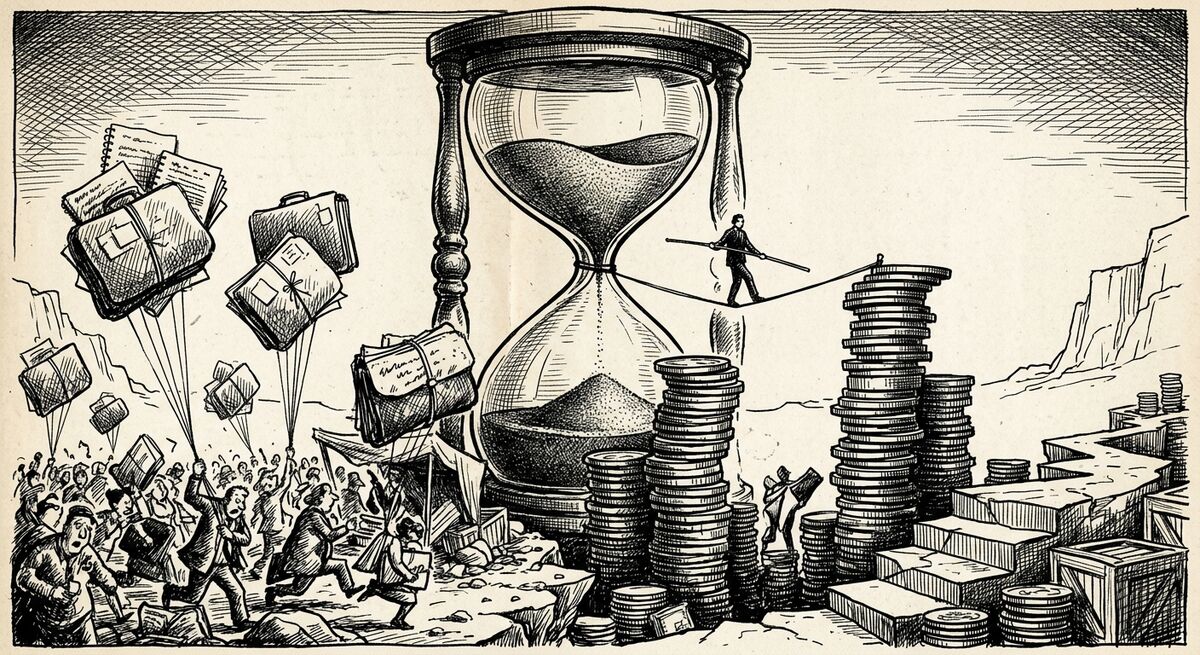
Let’s cut to the chase: the Federal Reserve's decision to hold interest rates steady at 3.5% to 3.75% for the second consecutive meeting is a clear signal that we are in for a prolonged period of elevated rates. With Cleveland Fed President Beth Hammack indicating that these rates might remain elevated for an extended duration, investors need to get serious about their portfolio strategies. The days of easy money are gone, and the implications for your investments are profound.
The Inflation Conundrum
Persistent core inflation is a specter that the Fed cannot ignore. The core inflation rate is projected to sit at 2.50% in February 2026, while the Core PCE Price Index is expected to hover around 3.10% in January 2026. Both figures are significantly above the Fed's long-standing target of 2%. This puts the central bank in a tight spot, as they must balance the dual mandate of fostering maximum employment while controlling inflation.
Market Sector Impacts
The implications of sustained higher interest rates for different market sectors are stark. Growth stocks, which thrive in low-rate environments, are likely to face headwinds as the cost of capital remains elevated. Investors in these equities should brace themselves for volatility and consider shifting their focus.
On the other hand, defensive dividend-paying stocks and financials may find themselves in a sweet spot. These sectors typically perform better in a high-rate environment, as higher interest rates can bolster the profit margins of financial institutions while providing stability to dividend-paying stocks. For instance, companies known as dividend aristocrats—consistently raising dividends for decades—might offer a safe haven in these turbulent waters.
Guidance for Conservative Investors
Now is the time for conservative investors to hone in on quality. The market landscape is shifting, and those who are still clinging to growth stocks may find themselves out in the cold during this period of economic recalibration. Look for companies that not only promise dividends but also have a solid history of increasing them, such as $JNJ, $KO, or $PG. These are your dividend aristocrats, and they could serve as the bedrock of a resilient portfolio.
In light of the Fed's current stance, investors should recalibrate their expectations and strategies accordingly. The economic landscape has evolved, and so must your investment strategy. With inflation remaining stubbornly high, it is imperative to consider how your asset allocation aligns with these economic realities.
Final Thoughts
In conclusion, the Fed's steady hand amid persistent inflation is not merely a backdrop for market performance; it is a clarion call for investors to adapt. With rates likely to remain elevated, the traditional playbook is no longer sufficient. A thoughtful approach that emphasizes quality and resilience will be essential for navigating the complexities of today's market environment. If you’re still betting on the notion that rates will plummet anytime soon, it might be time to rethink that thesis.