
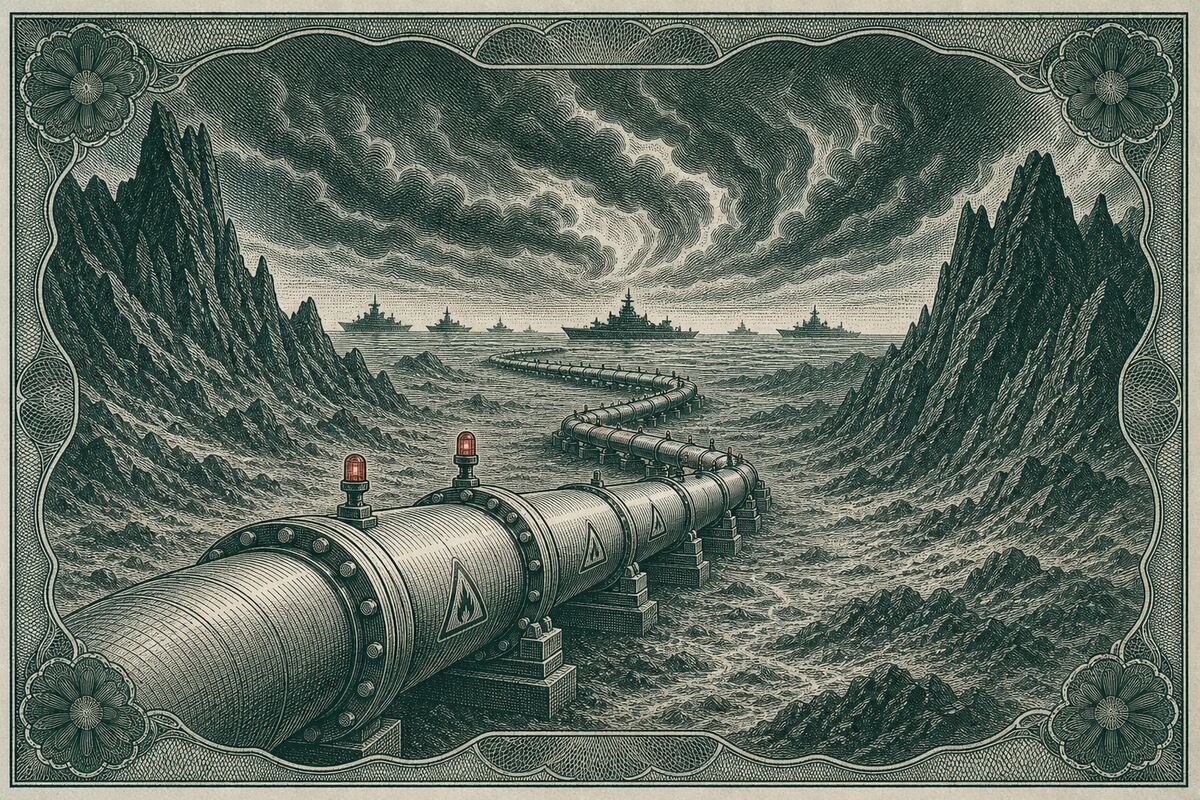
The energy market is facing a critical inflection point as geopolitical tensions in the Strait of Hormuz threaten to disrupt one of the world's most vital oil transit corridors. Iran has declared the waterway a "red line" in response to US military actions, a rhetorical escalation that traders cannot ignore. The situation reflects mounting regional instability that could reshape crude valuations and force portfolio managers to recalibrate their energy sector exposure.
What makes this moment particularly precarious for traders is the tangible impact already visible on maritime traffic. Vessel movements through the Strait have declined notably as the US naval blockade resumes, signaling that the geopolitical standoff is no longer theoretical—it is affecting real-world logistics and supply chains. For energy traders, this is not merely headline risk; it is operational risk with direct implications for oil availability, pricing, and market structure.
The Crude Price Equation Gets More Complicated
Oil markets have long priced in a geopolitical risk premium, but the current escalation introduces a fresh layer of uncertainty. The Strait of Hormuz handles a substantial portion of global oil traffic, and any disruption—whether through military action, blockade, or miscalculation—could trigger sharp price moves in either direction. Traders are now forced to weigh multiple scenarios: a temporary spike followed by normalization, a prolonged supply shock, or a diplomatic off-ramp that deflates tension.
The challenge is that each scenario carries vastly different implications for crude valuations. A brief flare-up might push prices higher on panic buying, only to reverse as cooler heads prevail. A sustained blockade, on the other hand, could create a structural supply deficit that persists for weeks or months. Investors should note that the current environment lacks the clarity needed to confidently predict which path markets will take, making position sizing and risk management paramount.
Broader Energy Sector Implications
Beyond crude itself, the energy sector faces a more nuanced risk calculus. On the one hand, higher oil prices could support margins for integrated energy companies and upstream producers. On the other hand, elevated geopolitical risk may pressure valuations if investors shift capital away from energy assets perceived as vulnerable to supply shocks. Additionally, tariff implications—mentioned by traders as a secondary concern—could compound margin pressure for energy companies with international exposure.
Refiners and downstream operators face their own headwinds. If crude supplies tighten, feedstock costs could spike, squeezing processing margins. Conversely, if markets overreact and prices pull back sharply, refiners may benefit from lower input costs, though at the risk of demand destruction if economic uncertainty rises.
What Traders Are Watching
The immediate focal points for energy traders include vessel traffic data, which serves as a real-time indicator of supply chain stress, and any further escalatory statements from either the US or Iran. Volatility in crude futures may spike on any new headlines, and traders are positioning defensively or opportunistically depending on their risk tolerance. The intersection of geopolitical instability and tariff concerns adds another layer, as trade policy uncertainty could dampen energy demand if economic growth slows.
Investors should note that the energy market's reaction to geopolitical events is not always linear. Market participants may initially overreact, only to rationalize positions once the acute phase of tension passes. Conversely, complacency can be dangerous if escalation accelerates faster than expected.
The Risk-Reward Calculus
For traders, the current environment presents both opportunity and peril. Long positions in crude could benefit from further supply disruptions, but face downside risk if tensions ease or demand concerns emerge. Short positions offer protection against a demand-driven correction but expose traders to squeeze risk if supply constraints intensify. The optimal approach likely involves careful position management, active monitoring of geopolitical developments, and a willingness to adjust exposure quickly as new information surfaces.
The Strait of Hormuz situation underscores a fundamental truth for energy traders: geopolitical risk is not a footnote in energy markets—it is a core driver of valuations. Until clarity emerges on whether this tension will escalate, stabilize, or de-escalate, traders should expect elevated volatility and wider bid-ask spreads as market participants reassess their risk appetite.
Bull/Bear Verdict
Bull Case: A sustained supply disruption from the Strait of Hormuz blockade could push crude prices higher, supporting energy sector valuations and benefiting upstream producers and integrated energy companies with strong balance sheets. Traders holding long positions may see gains if geopolitical tensions persist and vessel traffic remains depressed.
Bear Case: The current geopolitical uncertainty could trigger demand destruction if economic growth slows amid tariff concerns and elevated energy costs. A sharp reversal in tensions could cause crude prices to collapse, leaving traders who positioned for supply disruption facing significant losses. Refiner margins may also face compression if crude prices spike while demand weakens, and broader equity market volatility could force energy sector liquidation.