
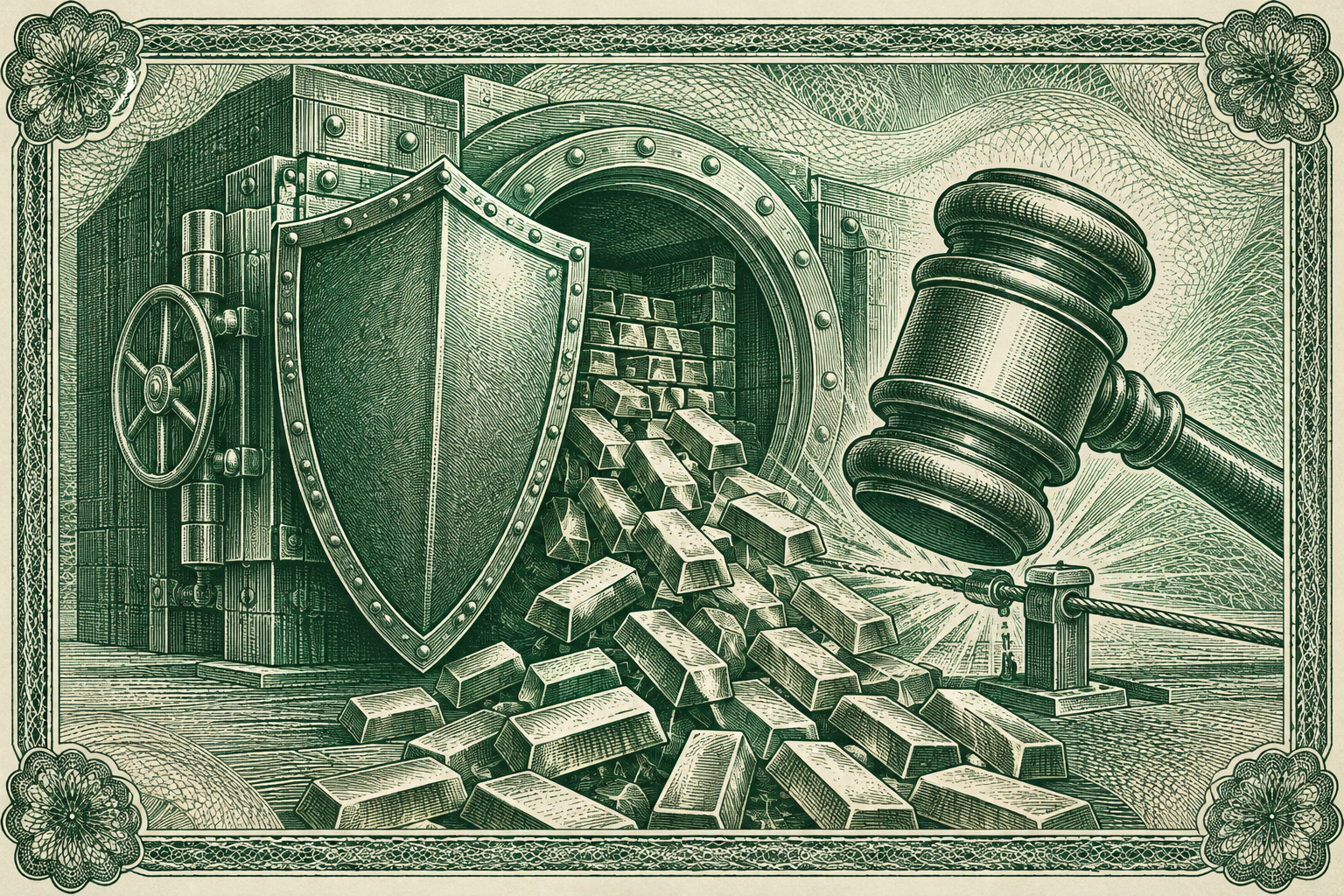
A $1.2 billion penalty is large enough to change the conversation around any major bank. For Bank of America, the fine puts compliance risk—not merely quarterly execution—back in focus for investors who view the company as a defensive large-cap financial stock.
The issue is not a reported share-price move or a disclosed change to the dividend. The immediate question is more basic: how much weight should conservative investors place on regulatory exposure when assessing $BAC’s earnings optics, valuation appeal and reputation for resilience?
According to Reuters’ October 13 report, the US government fined Bank of America $1.2 billion for failing to police suspicious activity. That is the central fact. The available information does not establish a specific impact on reported earnings, dividends or the company’s balance sheet, so any precise forecast would go beyond the evidence.
Why the penalty matters for earnings optics
A fine of this size can cloud near-term earnings optics even before investors have a complete picture of the accounting treatment or financial effect. A legal penalty introduces a distinct charge or obligation into the earnings discussion, while the underlying compliance failure raises a separate question about operating discipline.
That distinction matters. Investors may be able to separate a one-time legal cost from recurring banking operations. But a failure to identify suspicious activity can also prompt scrutiny of controls, oversight and remediation. Without additional sourced figures, the size of any earnings effect cannot be quantified. The optics, however, are straightforward: a $1.2 billion government penalty becomes part of the near-term investment narrative.
The defensive-bank argument meets its weak point
Large banks often attract conservative investors because their scale, established franchises and financial resources can appear more durable than those of smaller institutions. But scale cuts both ways. A systemically important bank operates under intense regulatory expectations, and a compliance breakdown can carry legal, financial and reputational consequences.
That makes compliance risk a recurring consideration rather than a footnote. The penalty does not, by itself, prove that Bank of America’s broader business is impaired. It does show why a defensive label cannot rest solely on size or a familiar dividend profile. Regulatory failures may arrive separately from credit losses, interest-rate pressure or weaker banking activity, creating another source of uncertainty in an otherwise conservative thesis.
Yield is only one part of the valuation case
For investors evaluating BAC, dividend yield and payout coverage remain relevant measures—but they are not complete measures of durability. The same analysis must include the potential burden of legal penalties, the quality of compliance controls and the possibility that regulatory scrutiny could remain an overhang.
The assignment provides no current dividend figure, payout ratio, valuation multiple or balance-sheet measurement. Those omissions matter because they prevent a data-based conclusion about whether the fine makes BAC attractive or unattractive at a particular price. The disciplined takeaway is narrower: any valuation appeal needs to be weighed against compliance and legal exposure, not viewed in isolation.
That is the contrarian point. The most important threat to a defensive bank may not always be a dramatic market event. Sometimes it is an expensive failure inside the control framework. Bank of America’s $1.2 billion fine renews that warning for conservative investors assessing what “defensive” really means.
Bull/Bear Verdict
Bull Case: BAC’s defensive case may remain credible if investors view the $1.2 billion penalty as a contained legal issue and continue to assess the bank through yield, payout coverage and balance-sheet strength.
Bear Case: The $1.2 billion fine may weaken BAC’s defensive appeal if the failure to police suspicious activity keeps compliance, legal and reputational risk at the center of the investment case.